
Globo: World Geography Game
NaKo Games LLCTrivia
4.7215.00 Reviews
- Version
- 2.2
- Installs
- 100.00K
- Age Rating
- Everyone
Screenshots
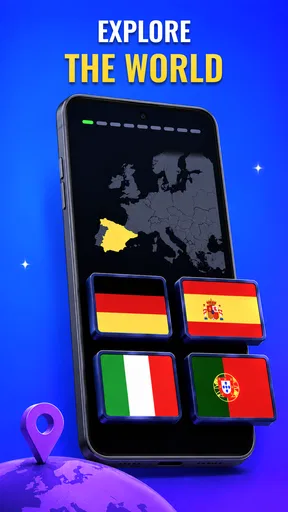
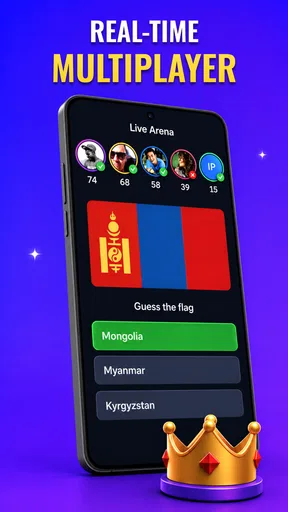
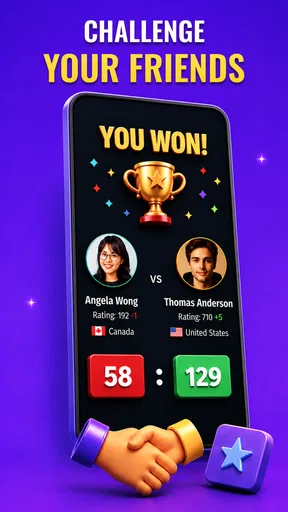
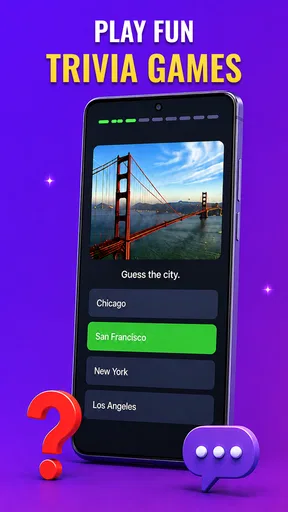
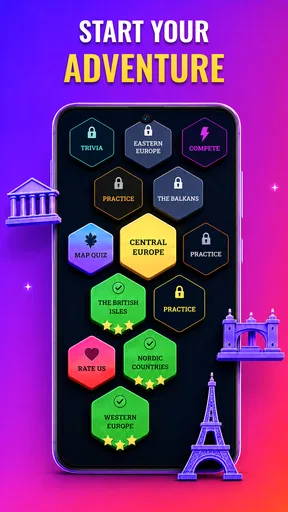
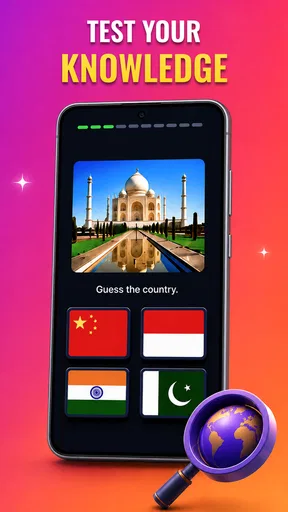
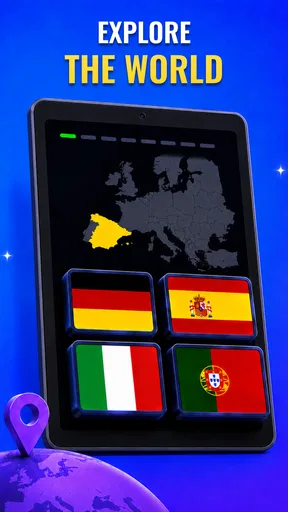
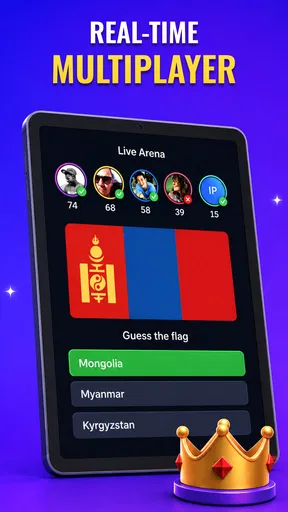
Our Review of Globo: World Geography Game
 Analysis by Appyee
I enjoy trivia games most when they teach me something without feeling like homework, and Globo: World Geography Game fits that idea well. It is a geography-focused game from NaKo Games LLC, built around learning about the world, answering questions, and competing with other players. After spending time with it, I see it as a good choice for short study breaks, family challenges, and anyone who wants a lighter alternative to a textbook or a conventional flashcard app.
The important distinction is that Globo is not trying to be a complete geography course. Its strength is turning recognition, recall, and friendly competition into a repeatable habit. I can open it when I have only a few minutes, test what I remember, and leave with a couple of facts or place names to look up later. That makes it approachable, although people looking for deep explanations or a structured curriculum may eventually want something more comprehensive.
How the current game feels to use
The game sits in the trivia category, but its subject gives it a clearer purpose than a general quiz app. Instead of jumping between unrelated questions about entertainment, history, and science, Globo keeps attention on geography. That focus matters because it lets me notice gradual improvement: countries, locations, and world knowledge become easier to recognize after repeated sessions.
The presentation is best suited to quick rounds rather than long, uninterrupted study. I can imagine using it while waiting for an appointment, during a commute, or as a relaxed evening challenge with someone else. The competitive angle gives each question a little more urgency than a private quiz, while the educational theme keeps the experience from feeling empty.
One practical strength is the low barrier to entry. The game is free to download, carries an Everyone content rating, and runs on devices using Android 7.0 or later. That combination makes it accessible to families and to people using older phones. The free entry point also makes it easy to test the game before deciding whether it deserves a regular place on the device.
There is a trade-off, though. Free trivia games commonly need some form of monetization, and Globo includes in-app purchases ranging from $3.99 to $39.99 per item. I would approach those purchases carefully rather than treating them as necessary from the beginning. A sensible first step is to use the free experience long enough to decide whether the question style and competitive rhythm actually suit you.
A useful game for small pockets of time
My favorite use case for Globo is not a long session. It is the small gap in the day when I want something more engaging than scrolling but less demanding than reading. A parent could play a round with a child and turn wrong answers into a conversation about maps. A student could use it as a warm-up before geography revision. A traveler could use it to refresh country knowledge before planning a trip.
The competitive design also creates a useful social routine. Rather than simply asking someone to “study geography,” I would challenge them to play and discuss the questions afterward. That changes the mood from memorization to a shared game. The limitation is that competition can make a player focus on speed or winning instead of understanding why an answer is correct, so I would pause after unfamiliar questions and investigate them separately.
What sets the learning experience apart
The most valuable way to use this game is as a retrieval tool. I would not treat every correct answer as proof that I understand the subject. Instead, I would notice the questions I guessed, missed, or answered slowly. Those are the areas worth revisiting outside the game. This approach turns a casual session into a simple personal study loop without requiring a separate tracking system.
A second useful habit is to group mistakes mentally by type. If I repeatedly confuse nearby countries, I need map context. If I recognize a country but forget its capital, I need factual recall. If I struggle with a region altogether, I need a broader visual overview. Globo can expose those weak spots, but it cannot replace the map, atlas, or explanation needed to fix every one of them.
I also think the game works better when players resist the temptation to rush through every question. Speed may be part of the competitive appeal, but careful attention creates more lasting learning. When I read an unfamiliar place name, I try to connect it with its continent, neighbors, coastline, or a memorable feature. That extra mental step is what makes the session more useful than simply tapping answers until the round ends.
Development and the current version
Globo was released on November 30, 2024, and the current version is 2.2. That gives the game a relatively recent starting point and shows that it has already moved beyond its first release build. I see that as a positive sign for users who care about an active product rather than an abandoned download, although a version number alone does not tell me how large or meaningful each change has been.
For someone already playing, the move to version 2.2 is best understood as part of the product’s ongoing refinement rather than a reason to expect a completely different game. I would update normally, then judge the experience by practical details: whether sessions feel stable, whether the question flow remains enjoyable, and whether the competitive side still feels fair. Those are more important to me than a large version label.
New users should also keep expectations realistic. A recent release can still feel focused and limited compared with long-established trivia platforms. Globo’s identity comes from its geography theme, not from having every possible mode or a huge range of subjects. That focus is exactly why it may appeal to one player and feel narrow to another.
The game has reached over 100K installs and holds a 4.7 average from around 3.8K ratings, with 215 written reviews. Those figures suggest that the concept is connecting with a meaningful audience, but they should not replace personal testing. Ratings tell me that many players enjoy the overall experience; they do not guarantee that the pace, question difficulty, or purchase model will match my own preferences.
What existing users may notice over time
For returning players, the biggest benefit is familiarity with the game’s learning loop. The more often I revisit a subject, the more clearly I can separate knowledge from lucky guesses. That makes repeat play worthwhile, especially if I treat each session as a diagnostic rather than endlessly chasing a perfect result.
There is also a possible downside to repetition. Geography trivia can become less satisfying if the experience starts to feel predictable or if a player has already mastered the material that appears most often. In that situation, I would use Globo for maintenance and quick challenges, not as my only source of new learning. The game is strongest as part of a broader routine that might include maps, documentaries, travel planning, or conversations.
For families, the Everyone rating is reassuring because the subject matter is broadly suitable for shared play. Still, I would play alongside younger users instead of assuming that every question will be self-explanatory. The educational value improves when an adult explains an unfamiliar term, points out a location, or turns an incorrect answer into a short discussion.
For competitive players, the global challenge angle may be the main attraction. It gives a simple geography question more energy because another person’s performance becomes part of the experience. The trade-off is that players who dislike pressure, rankings, or comparison may prefer a quieter quiz format. Globo is not the right choice if the only thing I want is a calm, private study tool with no competitive flavor.
Where it still has limitations
The clearest limitation is depth. A trivia answer can tell me whether I was right, but it does not automatically provide the historical, cultural, political, or geographic context behind that answer. If I want a guided lesson, detailed explanations, pronunciation help, or a planned progression from beginner to advanced study, I would choose a dedicated learning resource instead.
The second limitation is the tension between speed and accuracy. Competitive trivia rewards quick recognition, while genuine geography learning often requires time to compare regions and understand relationships between places. Globo can start the learning process, but I need to slow down and verify interesting discoveries elsewhere if I want durable knowledge.
The purchase structure is another point to consider. Since individual in-app items can cost from $3.99 to $39.99, I would not make a purchase simply because I enjoy the first few rounds. I would first decide whether the extra content or convenience solves a real problem for me. Players who want a completely unrestricted experience without optional spending may find the free model less comfortable than a paid app with a single upfront price.
There is also a subject-specific limitation: people seeking broad trivia variety may outgrow Globo. A general quiz game is a better fit when I want sports, films, science, literature, and current events in the same session. Globo is more appealing when geography itself is the reason I opened the app.
How it compares with familiar alternatives
Compared with flashcards, Globo feels more playful and less controlled. Flashcards let me choose exactly what to study, repeat a difficult item immediately, and build a carefully organized deck. Globo offers more spontaneity and competition, which makes it easier to start but less precise as a revision system.
Compared with a map app or atlas, it is more interactive but less informative. A map lets me explore borders, terrain, distances, and regional relationships at my own pace. Globo gives me a reason to recall information, but it is not a replacement for visual exploration. I would use the two together: play first to identify weak areas, then open a map to make those places meaningful.
Compared with a broad trivia game, Globo has a stronger educational identity and a narrower subject range. That specialization is its main advantage. I am less likely to feel that a session is random, but I am also more likely to run out of interest if geography is not a topic I naturally enjoy.
Compared with a structured geography course, Globo is easier to pick up and better for motivation, while the course is better for sequence, explanation, and measurable study goals. I would recommend Globo to someone who struggles to begin learning, not to someone who already needs an exam-focused syllabus.
Who should try it and who should skip it
I would recommend Globo to curious learners, families, casual quiz fans, travelers, and students who want a short geography refresher. It is particularly suitable for people who learn well through repetition and friendly competition. The free download means there is little reason not to test the basic experience before forming an opinion.
I would be more cautious recommending it to players who dislike online competition, want detailed teaching after every answer, or expect a large collection of unrelated trivia categories. I would also point serious students toward a more structured resource if they need reliable coverage of a curriculum rather than enjoyable practice.
My practical advice is to begin with short sessions and keep a mental note of uncertain answers. Do not judge your knowledge only by the score. After playing, choose one unfamiliar country or location and spend a few minutes finding it on a map. That workflow turns Globo from a disposable quiz into a useful prompt for deeper learning.
What I would watch as the game develops
Because version 2.2 is the current build, I would watch how NaKo Games LLC continues to shape the experience. The most valuable direction would be improvements that deepen learning without weakening the quick-play appeal: clearer context around difficult answers, better ways to revisit mistakes, and enough variety to keep experienced players interested.
I would also pay attention to how the balance between free play and purchases feels over time. Optional spending is easier to accept when the free experience remains satisfying and the paid items feel genuinely useful rather than essential. That balance will matter especially to families and frequent players.
Finally, I would look for signs that the game can serve both casual competitors and serious learners. Globo does not need to become a full course to improve. Even small additions that help me understand why an answer is correct, remember a previous mistake, or explore a region after a round would make the existing concept more valuable.
Overall, I find Globo: World Geography Game most successful as a friendly gateway into geography. It makes the subject easy to approach, gives short sessions a clear purpose, and adds enough competition to encourage repeat play. Its limits are just as clear: it is not a full atlas, a complete course, or the best choice for people who want every trivia topic in one place.
For me, the recommendation comes down to expectations. If I want a quick geography challenge that can become part of a daily routine, I would install it and give the free experience a fair try. If I need detailed instruction, precise revision control, or a completely noncompetitive study environment, I would choose a different tool. Used for what it does best, Globo is a pleasant and practical way to make world knowledge a little more familiar.
Verdict
Strengths of Globo: World Geography Game
- Short rounds make it easy to play during quick breaks.
- Covers countries, capitals, flags, and landmarks in one app.
- Progress tracking helps you see which geography topics need practice.
- Suitable for different ages, from beginners to geography enthusiasts.
- Can improve world knowledge through repeated visual quizzes.
Limitations of Globo: World Geography Game
- Some questions may feel repetitive after extended play.
- Advanced players may find the difficulty insufficient.
- Accuracy can depend on how regional names and borders are presented.
- A stable internet connection may be needed for some features.
- Frequent quiz play can become less engaging without new content.
Similar Picks in This Category
View All
Millionaire 2026 Quiz & Trivia
Quiz & Trivia Games by Submarine Apps4.5

Brain Test 2: Tricky Stories
Unico Studio4.7

Trivia Crack: Brain Quiz Games
etermax4.4

QuizzLand. Quiz & Trivia game
Quiz & Trivia Games by Mno Go Apps4.8

Brain Test: Tricky Puzzles
Unico Studio4.7

Logo Quiz
bubble quiz games4.5
Frequently Asked Questions
What is Globo: World Geography Game?
Globo: World Geography Game is an educational geography app designed to test and improve your knowledge of countries, flags, capitals, borders, and world locations. In each challenge, you identify a country or answer a geography-related question, making progress through short, replayable rounds. It is suitable for casual players, students, travelers, and anyone who enjoys learning about the world through quizzes.
Is Globo: World Geography Game suitable for beginners?
Yes. Globo is generally accessible to beginners because its gameplay is based on straightforward geography challenges rather than complicated controls or advanced strategy. New players can learn at their own pace, while more experienced users can use the game to check how accurate their knowledge really is. Difficulty may increase as you progress, so the app can remain challenging after the basics become familiar.
Can I play Globo: World Geography Game offline?
Offline availability may depend on the version of the app and the specific feature you want to use. Basic quiz content may work without a constant connection after installation, but advertisements, updates, statistics, leaderboards, or other online services can require internet access. Before traveling or studying without Wi-Fi, open the app once online and verify which modes remain available offline.
Does Globo: World Geography Game include advertisements or in-app purchases?
Globo may include advertising or optional paid features, depending on the platform, region, and current release. Free access can be enough for trying the main geography challenges, although advertisements may appear between rounds or during navigation. If the app offers a premium upgrade, check its store listing carefully to understand what it removes or unlocks, as pricing and available options can change.
Is Globo: World Geography Game useful for learning geography?
Globo can be a useful supplementary learning tool because it encourages repeated practice with countries, flags, capitals, and geographical locations in a quick game format. Its visual and interactive approach is often more engaging than memorizing lists. However, quiz apps can simplify complex topics or contain occasional inaccuracies, so students should combine Globo with reliable maps, textbooks, or educational sources for deeper study.
Play our best games!


